Across the Pacific, the intensity and frequency of natural hazards are increasing, from stronger cyclones to earthquakes that trigger secondary impacts such as tsunamis and landslides. Vanuatu regularly faces challenges arising from its location at the centre of a region that is highly susceptible to such disasters. In such a setting, aviation weather observing infrastructure is essential for reducing risks, protecting communities, and enabling effective emergency response, to better strengthen disaster preparedness in Vanuatu.
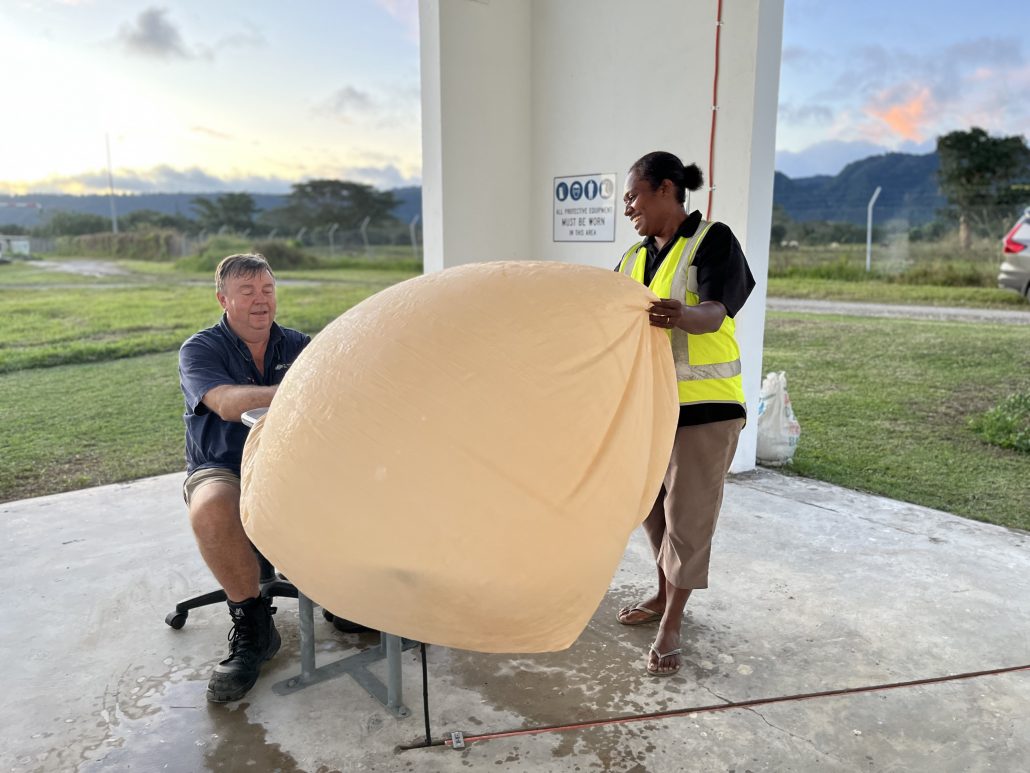
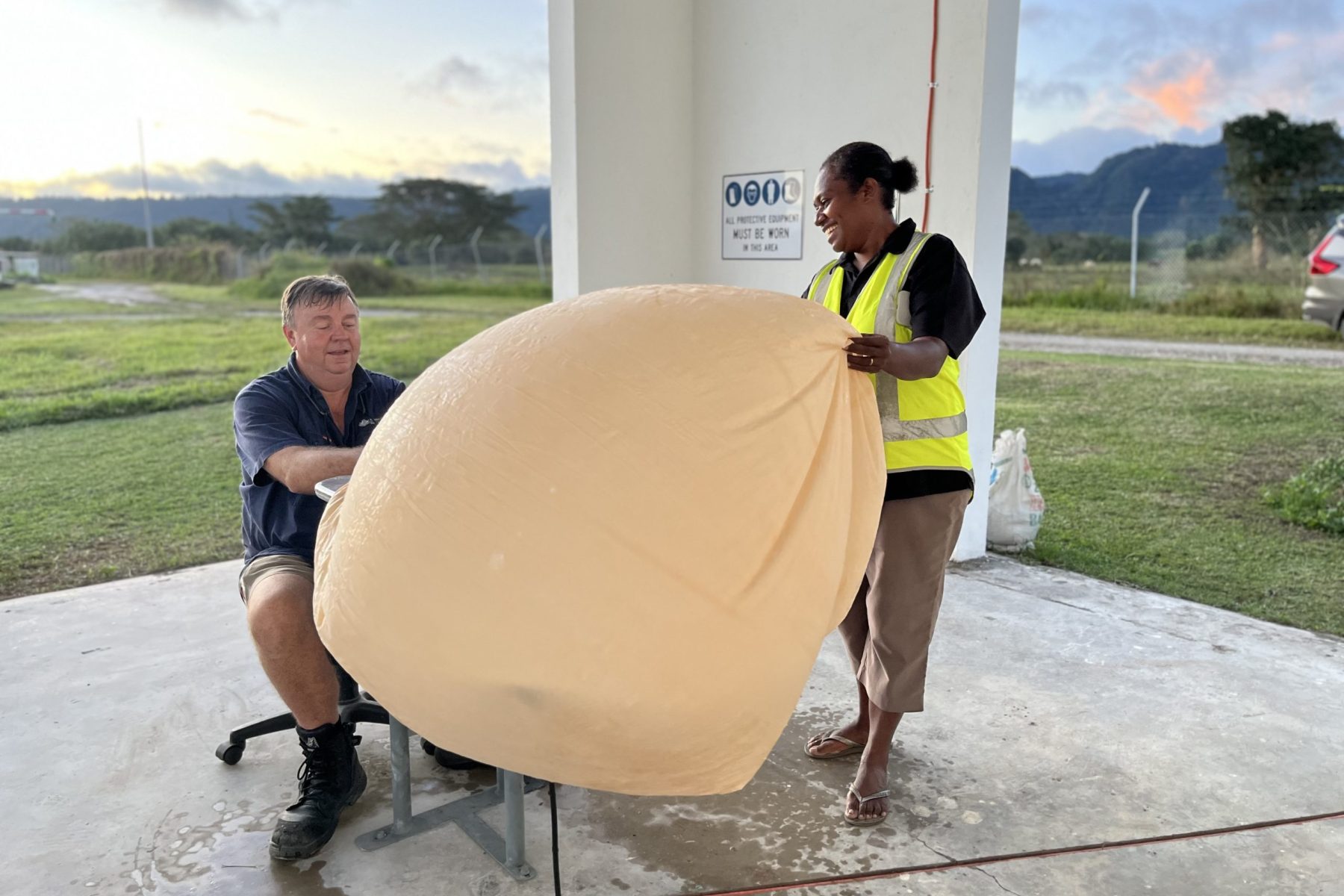
On 15 December 2024, restoration works were completed on the Bauerfield Upper Air Sounding Station on Efate. Two days later, a 7.3 magnitude earthquake struck the island, claiming 14 lives, displacing thousands, and causing widespread destruction across Port Vila and nearby communities. Despite the devastation, the restored station – which had previously been destroyed by Cyclone Pam in 2015 – withstood the earthquake without damage. By January 2025, the station was back in operation, launching one weather balloon daily to provide vital atmospheric data.
The restoration was supported by the Australian Bureau of Meteorology and the Australia–Pacific Partnerships for Aviation (P4A). Alongside this work, the Bureau is constructing three new Aviation Weather Observing Systems (AWOS) at Bauerfield on Efate, Santo Pekoa on Santo, and Whitegrass Aerodrome on Tanna. These systems provide accurate, real-time weather information to guide pilots and air traffic controllers, manage risks from sudden weather changes, and improve airport efficiency.
Efate, Santo, and Tanna are among Vanuatu’s 13 principal islands, within a nation of more than 80 islands. Aviation safety is critical to connecting communities, supporting tourism, and ensuring essential goods and services reach people across the country.
Although earthquakes cannot be predicted, robust weather observing systems strengthen national resilience by providing timely data for flight safety and supporting emergency services when rapid response is most needed. P4A, the Government of Australia and the Bureau are helping enhance disaster preparedness in Vanuatu, sustain recovery efforts, and maintain safer skies.